Mr. Mashtun

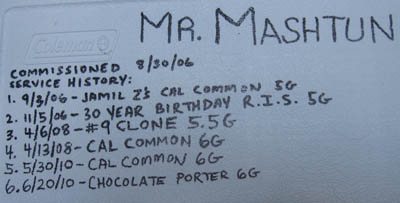
Mr. Mashtun

If you’ve been keeping up with the blog, you know I’ve been trying my hardest to pin down efficiency losses in my system. I started keeping meticulous records on water in and wort out numbers, going as far as weighing the liquid to be as accurate as possible. When my last brew session clocked in with an efficiency in the mid-50′s, I decided to try changing my mill.

Up until now, I’ve been milling my grain with a Corona (aka Victoria) mill. This is a cheap mill made for grinding corn into flour for tortillas, not necessarily for crushing malt for brewing. There are some die-hard Corona mill supporters out there, claiming they can regularly get in the 80% efficiency range, but I never felt it gave me a good crush. In my experience, it was horribly imprecise, either spitting out uncracked grain or pulverizing both husk and kernel into flour. Add to that the small hopper and manual hand-crank operation, and it was time for a change (yes, you can motorize the Corona fairly easily, but I didn’t think it was worth the effort). I’m not doubting that people get good results with the Corona, but for me, it was too little, too late.

I did a bit of research, and wound up ordering a Barley Crusher mill. This is a highly rated, fairly inexpensive grain mill with two knurled steel rollers designed especially for brewing. I took advantage of the discount pricing BeerSmith is offering and ordered the 15 pound hopper model for $154 (with shipping). When the mill arrived this week, I was excited to try it out for this weekend’s brew.

In a word: amazing. The Barley Crusher took a little adjusting to – I ran a half pound of grain through to break it in, per the instructions, with no issues. Using a power drill which easily attached to the crank, it took about three seconds. However, when I loaded the hopper with 10 pounds of pale malt, the rollers wouldn’t grab the grain and just spun uselessly. A quick search online showed this isn’t an uncommon problem, but one that is easily solved – by loading the hopper with one scoop of grain first, I was able to “prime” the rollers and once they caught, I was free to load the hopper to capacity.

What would have taken me the better part of an hour with the Corona took no more than three minutes with my DeWalt drill and the Barley Crusher. More importantly, however, was the look of the crush – the kernels were all cracked nicely, but the husks were still intact – perfect for setting a filter bed in the mashtun. I crossed my fingers, hoping this would boost my numbers a bit.

I noticed a difference during sparging and lautering – my wort ran clear faster, and I had no hint of a stuck sparge. I measured my pre-boil efficiency and came out over 75% – about a 20% boost just from changing one piece of equipment! Now, my brewhouse efficiency (true efficieny, into the fermentor) dropped quite a bit, but that was due to excess wort losses – I had trouble racking into the fermentor due to a clogged bazooka screen in the kettle (using whole leaf hops without a hop bag = dumb). At the end of the brew, I clocked in at 5 gallons of 1.060 OG wort when I was expecting 6 gallons of 1.061. The volume difference killed my brewhouse efficiency, but my recipe was calculated at an estimate of 70%, so it all balanced out in the end. I’m happy – my last brew came in 18 points under gravity, so this is a major improvement!

I will keep chasing my numbers and reporting back here – if I want to start formulating my own recipes and brewing to consistency, I need to dial in my system exactly. That means getting good sugar extraction from my mash, figuring oiut my evaporation rate, and determining exactly how much water/wort is lost to grain absorbtion and tun/kettle deadspace.

The Chocolate Porter is in the fermentor happily bubbling away (at 68°F, innoculated with the WL San Francisco Lager yeast I cultured from the last batch). I used my new Thomas Fawcett & Sons Halcyon pale malt as the base, and I am expecting nothing short of greatness from this batch! I am also proud to announce that during the mash, I grilled up some traditional Wisconsin-style bratwurst. Below is a picture of them simmering in beer and onions before moving to the grill.
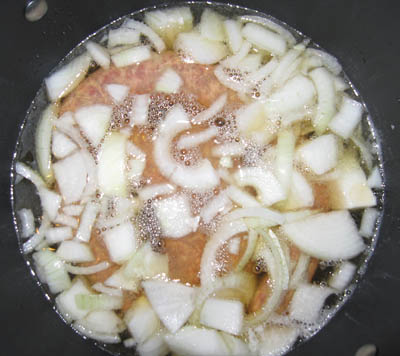
Simmering bratwurst

Simmering bratwurst

The wort sample from the porter tasted dead on, the bratwurst were delicious on a toasted hero with raw onion and brown mustard, and it made slaving away over propane burners in the sweltering heat worth it. Nothing says summer like mixing a brewday with some grilling! Next week, I hope to knock out a new version of the California Common recipe while smoking some of my (semi)famous pulled pork. Speaking of smoking, I have plans to smoke some grain to create a cherry-smoked Hefeweizen and a classic Bamberg Rauchbier.

Tell me about your most recent brewday, your battles with efficiency, and your favorite sausages!

Coming soon, on lootcorp: my new chest freezer, why new beer site BrewAdvice.com needs our help, how to wire up a Ranco temperature controller and save some money, and lootcorp.com’s very first iPhone app!

Prost!
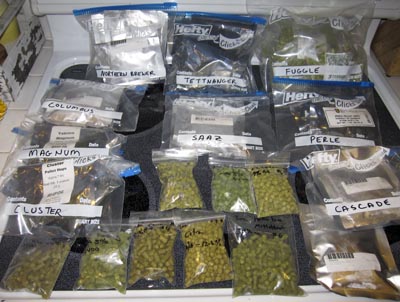
Yeast starter

1.25L yeast starter

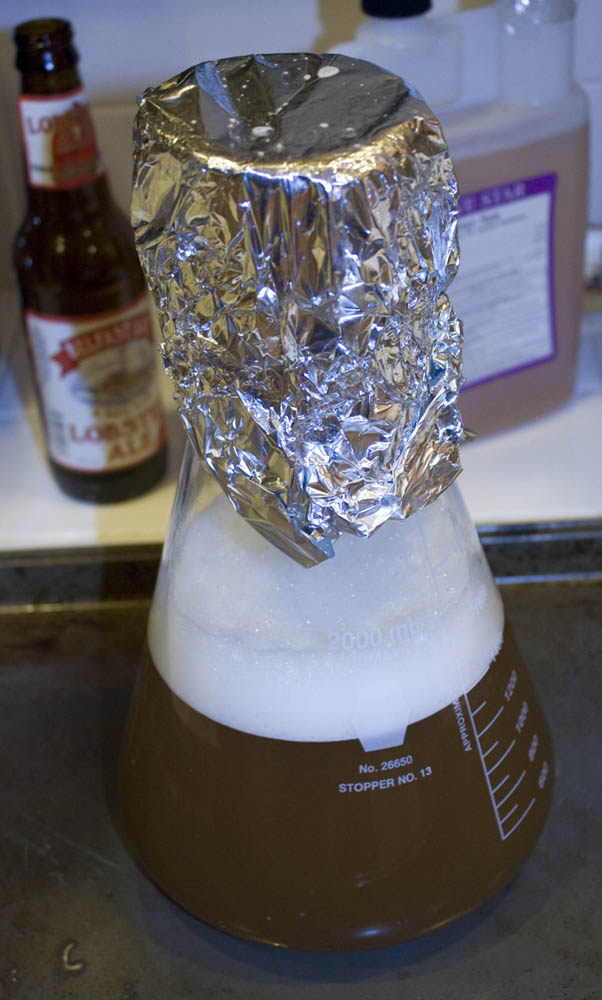
It all starts with a starter. Saturday night I cooked up a 1.25L starter to get my yeast ready for a Sunday brewday. Usually I make my starters a week or so in advance, letting them ferment out completely and then crash-cooling them, but this time I decided to try something different. I’ve read that making a starter the night before (or even morning of) brewday allows you to pitch the yeast at their most active. The only downside is you are adding the entire starter volume to your wort, but I figured 1.25L wouldn’t hurt the final product in any meaningful way. The starter preparation went down without a hitch, and I readied for brewing the next morning.

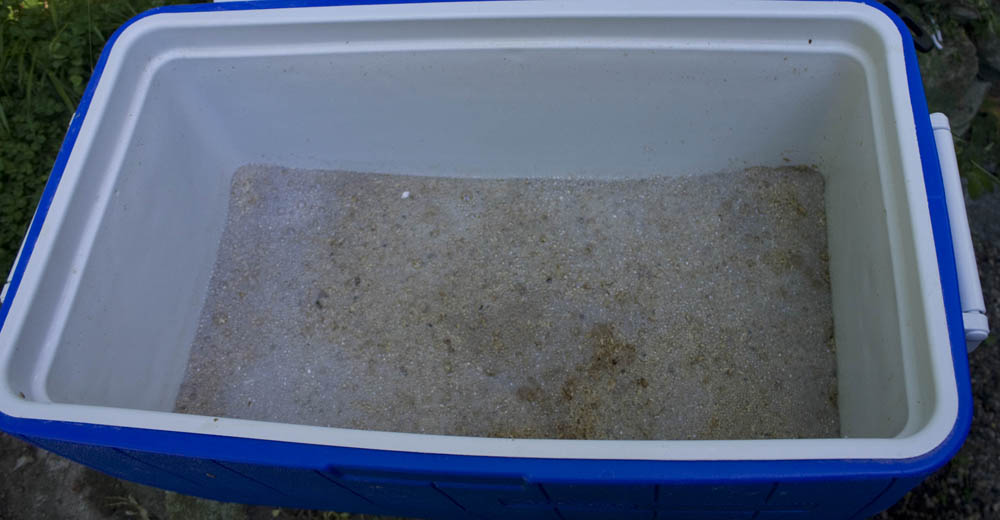
The beginning of the brewday went very slowly – I had to do a lot of cleaning and prep work since my brewery had sat dormant for so long. After a few hours of getting organized, washing equipment, and grinding grain, I was ready to mash in. I was using my recipe for Engine 97 Steam Beer, which calls for mashing at 154°F for one hour. I stirred and measured the mash temperature every 15 minutes.

Mashing in

Mashing in

I batch sparged and wound up with a little over 10 gallons of wort. I had measured my water in and out of the mash very carefully (using a scale to weigh it) since I am trying to lock down the loss numbers for my system. This brew lost appx. 1.5 gallons to grain absorption and another half gallon or so to tun deadspace. These numbers were a bit off from my assumptions, and this (along with poor efficiency) caused me to miss my OG by quite a bit. During the next brew, I will try and pin down my efficiency problems, although I have a suspicion that my Corona mill is to blame.

Starting to boil

Starting to boil

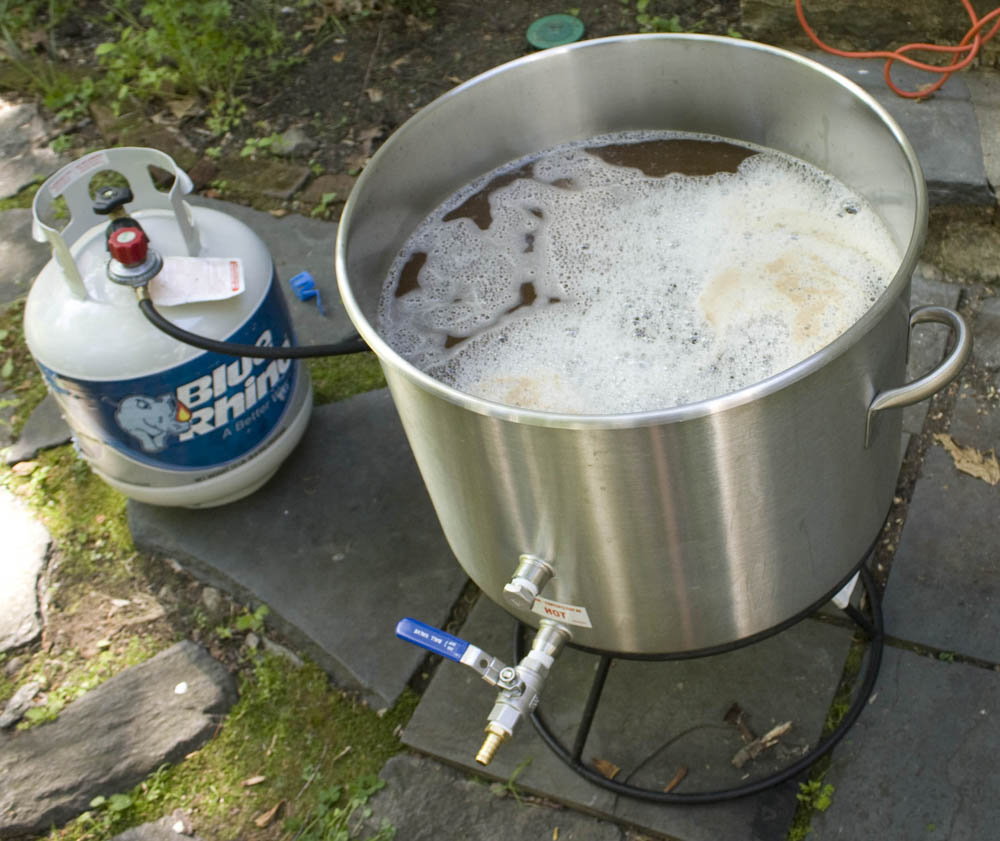
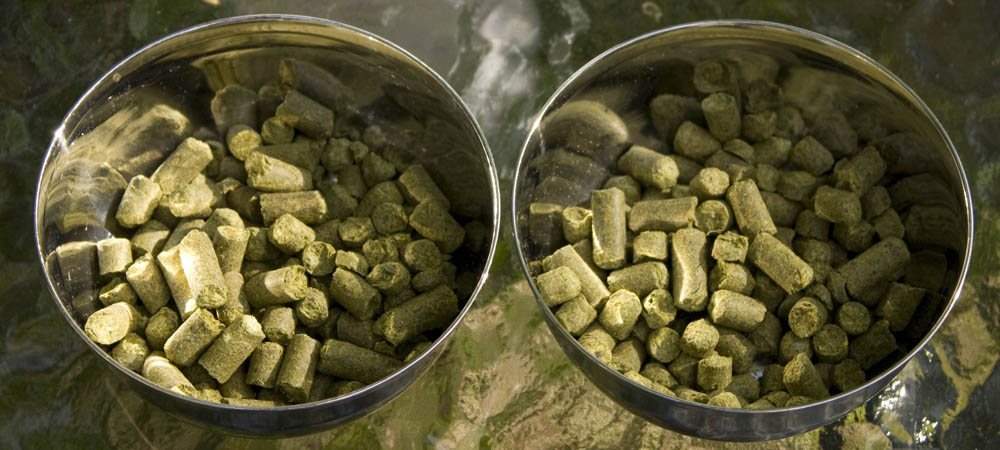
After the mash was complete, I transferred the wort to the kettle for boiling. Everything from here on in was pretty textbook – 90 minute boil, with hops additions at 60m, 15m, and flameout (all Northern Brewer pellets).

Northern Brewer hops

Northern Brewer hops

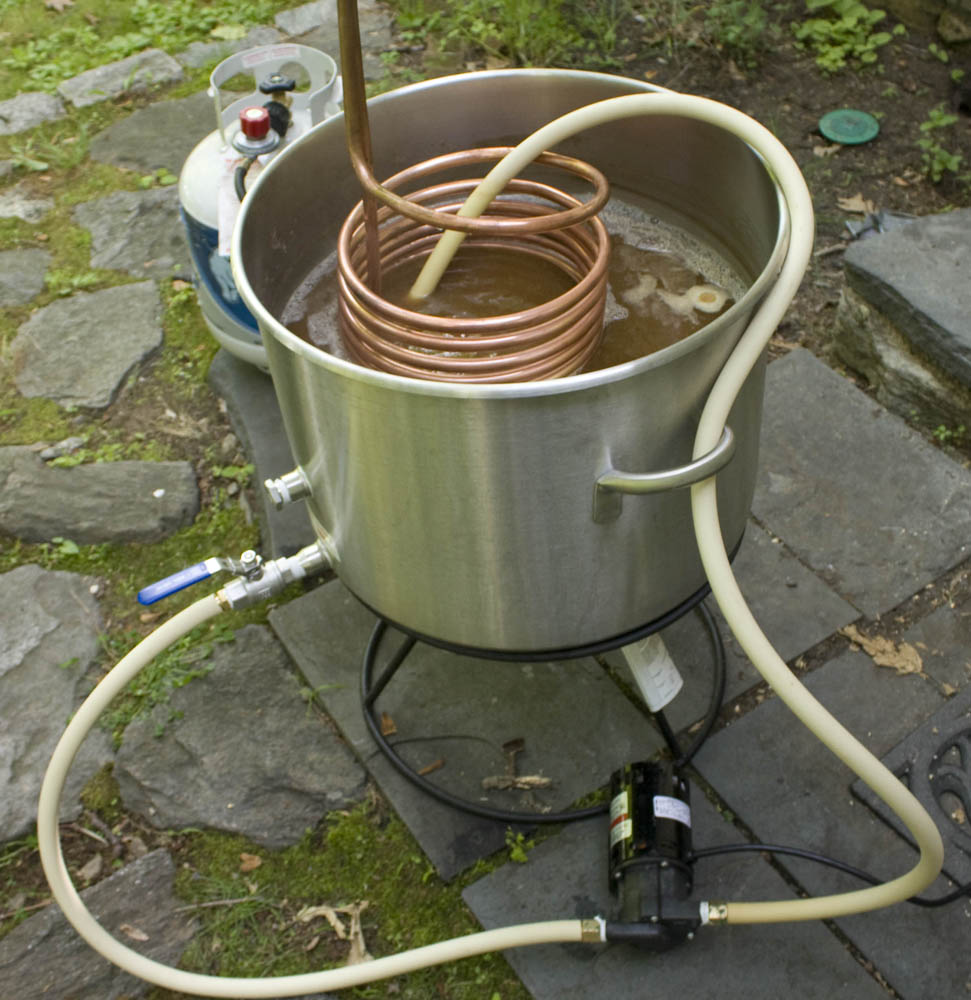
I set up for chilling by adding the IC to the boil with 20m remaining, along with a Whirfloc tablet. I also started recirculating wort through my March pump to sanitize it. The pump is great – it allows me to chill faster by moving the wort around the chiller in the kettle, and then lets me transfer to the fermentor with ease.

I chilled down to about 68°F (took about 20 minutes), racked to the primary, and added the yeast. Set it up in the fermentation fridge to ferment around 58°F. There was airlock activity within 24 hours, and the beer is now happily bubbling away.

Chilling the wort

Chilling the wort

I wound up with an OG of 1.042 (reading taken before adding the starter wort) – my target was 1.055 or so, so this is going to be a bit lighter beer than intended. I wound up with an efficiency of around 55%. I’ll need a few more brew sessions of data before I can really figure out where my losses are occuring, but I am tempted to try the same recipe with malt milled at the homebrew shop to see if I get a big jump. I have a love/hate relationship with my Corona mill, but I just don’t know if it is consistent enough to get a good crush. Seems I am either getting uncracked kernels or flour, and it is very hard to find that middle ground.

I will be using this batch’s yeast cake to brew another few batches of this beer – I have been told the yeast doesn’t reach its peak until the third batch or so. Hopefully I’ll be able to get my system dialed in and have a perfect batch of California Common by that third time around.

Autumn leaf

Fall is here!

Wow – I can’t believe Fall is here already! I had a really crappy summer – the weather ruined just about every weekend I had at home, while wedding planning (T -124 days) took up the rest. I look back now and realize how incredible the odds were that every weekend we planned wedding stuff for would be beautiful, and every other weekend would be raining/hurricaning/fire storming. Yea, I can’t win a scratch off Lottery game, but I can defy the laws of probability when it comes to lost brewing opportunities!

Anyway, with Summer 2009 a bust, we look forward pleadingly towards Autumn to right the wrongs Nature has smacked us with. As previously mentioned, I am planning a nice pumpkin spice ale and a porter with the star anise I picked up a few months ago. A couple of questions for discussion and debate -

1. Pumpkin ale – with or without real pumpkin?
2. Star anise in a rich chocolate porter – yay or nay?
3. Have you ever used cardamom in beer? It goes well with tea…
4. Can I somehow work my avocado fetish into one of these beers?

Also, let me know what you have cooking for the Fall and holiday seasons!

Star Anise

Star Anise

I came across some star anise in an ethnic supermarket the other day, and picked some up on a whim. I’ve been trying to come up with a recipe to try it in, when it occurred to me that it might be tasty in some beer. I’ve seen mention of it being used in some Belgian brews – supposedly it lends a sharp licorice flavor to the beer, and takes awhile to mellow. I’m thinking of using it in a stout or porter recipe – something with enough body and flavor to support this strong spice. Has anyone used this in a similar style? I’m wondering if it would play nice with chocolate, hazelnut, or vanilla – some of my favorite flavors for stouts. I also made a bourbon Russian imperial stout once that I could picture the licorice flavor in. I’m going to play around with some grain bills tonight and try to come up with a sample recipe – if anyone has any feedback or suggestions, leave a comment!

Summer beer

Summer beer

With the Fourth of July officially in the bag, we move into the “dog days of summer” phase of the year. What have you guys been brewing up for the hot months of July and August? Are you still making Hefeweizens, Wits, and light lagers? Anyone bucking the trend and making Imperial Stouts or something? Super organized brewers already planning their pumpkin spice brews for Thanksgiving?

I’ve got one Witbier planned (didn’t get to it this weekend), along with the 5 gallons of my banana wheat beer (which is aging nicely, with the banana becoming a muted tone instead of an attention hog). Then what? Maybe a lager – I’ve had Kölsch on the mind for awhile. Anyone have a good recipe?

Bananas

Bananas

Well, you can’t win them all.

I kegged up the summer wheat beer I brewed up a few weeks ago, and I knew I had a problem as soon as I opened the fermentor and the rich smell of ripe bananas washed over me. My first thought was some sort of infection – I had used Wyeast’s 3333 – German Wheat and expected a nice, clean flavor like an American Wheat (my first yeast choice, which the homebrew shop was out of). However, a little reseach led me to the fact that 3333 can indeed throw out banana esters when fermented a little on the high end of the temperature range. I had fermented this in the kitchen and the ambient temperature probably ranged from 65-75°F. Here is where laziness came back to haunt me – I have a fermenting refrigerator and forgot how important a cool fermentation is for a clean tasting wheat. I should’ve used the fridge and had this beer fermenting in the very low sixties.

Anyway, what’s done is done, and I now have an interesting brew on my hands. There is a definite banana flavor and aroma there – mixed with the citrus notes from the grains of paradise, the flavor reminds me of those Tropicana orange/banana fruit juice blends. The base reminds me a bit of Sam Adams’ Summer, which is sort of what I was aiming for, but the banana really throws it off. It isn’t fully carbonated yet – adding even a touch of carbonation helped the beer even out quite a bit, and I’m hoping some cold conditioning and proper carbonation might save it in the end. It is definitely drinkable at this early stage, but it is certainly not my best work, and a problem which could have been easily avoided. Maybe it will wind up drinking like a slightly weird Hefeweizen – I’m crossing my fingers.

I was hoping this would be my first competition beer – I might enter it just to see what the judges make of the flavor, but I’m not bringing home any Best of Shows with this one…

Blichmann Engineering's BeerGun

Blichmann's BeerGun

With my newfound desire to enter my beer into some competitions, I needed a way to get it out of the kegs and into bottles. I’ve been messing around with filling growlers and trying out a Carbonator Cap for homebrew portability, but I wanted a way to bottle my beer that would preserve the quality and allow me to send some off to the judges. Enter the BeerGun by Blichmann Engineering.

Are any of you using this beast? It’s supposed to be the pinnacle of draft-to-bottle technology.

For those unfamiliar with the issues of going from keg to bottle, beer will foam when exposed to rapid pressure changes – this makes filling bottles from a pressurized keg difficult. The only real solution used to be counter-pressure bottle fillers, which are unwieldy contraptions that pressurize the bottle and allow you to fill it without the beer foaming all over the place. The BeerGun is supposed to be a much more elegant solution, gradually reducing the pressure of the beer and allowing for one-person operation.

It should be here in a couple of days, and I’ll be sure to post a full review once I get a chance to use it. I’ve already missed the NY State Fair competition deadline, so I’ll have to check the AHA/BJCP calendar and see what my next target is.

Speckled vs Reckless

Speckled vs. Reckless

The Memorial Day testing is complete, and I am happy to report that my Old Reckless Hen (ORH) has edged out Old Speckled Hen (OSH) in a completely biased and partial competition! Here’s the tale of the tape.

Appearance: The beers look nearly identical – a rich copper color with a thick head that sticks around awhile but vanishes with no lacing. If anything, ORH was a touch darker, which makes sense since it was a partial boil extract brew. Winner: Tie

Aroma: Upon pouring, OSH greeted me with a skunky odor – perhaps due to the long distance the beer traveled and the clear bottle (why?!?) it came in. The skunkiness dissipated a bit and gave way to an aroma that reminded me of iced tea. ORH had a much more appealing aroma – no skunkiness, and a slightly sweet, fruity note hanging very discreetly in the background. For some reason, it reminded me of those orange candy circus peanuts that taste like bananas. That’s a horrible description, since you will conjure up all kinds of negative connotations, but I assure you, it was a pleasant and very subtle scent that enticed you to take a sip. Winner: Reckless

Mouthfeel: Both beers drink very nicely. Moderate carbonation with a soft feel on the tongue. They both finish clean on the palate, with no syrupy residue and a pleasant bitterness on the tail end. However, the bitterness in the OSH was a bit more refined and less harsh than ORH. Points go to Speckled here, but I’d like to point out that Reckless is only three weeks old and that harsh bite will mellow nicely. Do I hear rematch? Winner: Speckled

Flavor: OK, so here’s what really matters. Both beers are tasty, with nice malty backgrounds. However, with OSH I pick up an almost lemony flavor – a brightness that’s not quite unpleasant, but seems a touch out of place. Combined with the iced tea aroma, I feel like I’m drinking a spiked Lipton’s at times. This effect was accentuated as the carbonation faded and the beer flattened out. The ORH has a chewier, more complex taste – next to the malt, there are some delicate notes of…what, exactly? Almost fruity, but it disappears too quickly to pin it down. I like both of these beers, but I’m going to give the points to Reckless, simply due to the slightly fuller & more complex taste. Winner: Reckless

Overall: Well, there you have it – Reckless wins by a nose. However, we have to consider the fact that one beer is fresh and on draft while the other has been shipped halfway around the world in a clear bottle. Maltose’s kit came very close to the original, and some of those evasive fruity notes might be due to the two yeast packs that got pitched on brewday. I’ll take the victory, although I think Old Speckled Hen would taste much better in an English pub and Old Reckless Hen needs to mature and mellow out a bit more. If anything, the reckless brew experiment should prove to new homebrewers everywhere – relax! You WILL make beer, and chances are it will be pretty good!

Let me just say, corny kegs are awesome. Not only do they make racking days a piece of cake, they apparently have mystical powers which protect and nurture your beer.

I needed to get ready to keg the Old Speckled Hen clone I brewed up a couple of weeks ago. I had some kegs from last summer sitting in the chest freezer – an almost-kicked boysenberry wheat and a few gallons of my RyePA (Pale Ryeder). It had been almost a full year since I had tasted either of these beers, and I was expecting them to be long past spoiled.

I tasted the Pale Ryder first, figuring it would have held up better against the ravages of time. Indeed, the beer tasted fine – great, even. Perfect carbonation level, good balance, just a touch of that heavy, almost syrupy mouthfeel found in Imperial IPAs. I enjoyed a quick sample and turned to the other keg…the wheat beer. There was no way this beer was still good. I braced myself for the unpleasant task of cleaning out the keg and dragged it outside.

I dispensed a little beer and sniffed it. It smelled OK. Ah, you only live once, right? I gave it a taste…and it was delicious!! I immediately dispensed the remainder of the keg into a pitcher, shocked that the beer had held up so well. I see it as a sign my sanitation and racking procedures are OK. What’s the longest you guys have kept a beer in a keg?

In other corny news, I kegged the Old Reckless Hen tonight, and it tasted pretty good out of the primary – can’t wait to try it with some carbonation. I’m going to enter the Old Reckless Hen, the new wheat beer that’s almost ready, and, why not, some Pale Ryder to the NY State Fair. This will be my first competition, so I’m excited to see what kind of feedback I get. I’ll let you know!

Boiling the wort

Boiling the wort

First off, Happy Mother’s Day to any moms out there! I’ll drink one in your honor tonight!

Yesterday was a very productive brewing day. I woke up to heavy rain and resigned myself to having to postpone yet another brew. However, a couple of hours later the rain had stopped and I thought the day had a chance of clearing up. I decided to plan a quick extract brew, hoping to sneak it in before the weather turned again.

I ran out to Maltose and picked up some ingredients – 6.6# of wheat LME, an ounce of Vanguard hops, a pack of Wyeast German Wheat, and a pound of Orange Blossom honey. My recipe was a slightly modified version of the Wildflower Wheat found in Sam Calagione’s book Extreme Brewing. I couldn’t find chamomile anywhere, so I planned on using some dried elderflower I had at home. I couldn’t find the elderflower, so I settled on some Grains of Paradise instead, hoping it would give a touch of peppery citrus to the finished beer.

A few hours later, I had five gallons of beer sitting in the fermentor. The brewday was perfect – the weather turned beautiful, everything went smoothly, and doing an extract brew saved me a bunch of time. I did a full boil in my aluminum kettle (which usually serves as my HLT) – just didn’t feel like breaking out the huge kettle when I had the smaller one ready to go.

The wort was treated to a 60m boil, with hops added at 60m, honey and Whirfloc at 10m, and spices at 1m. Since I was using the smaller kettle, I didn’t have my evaporation rate nailed down. I finished up with around 5.75G of wort, chilled down to 64ºF, and pitched my yeast. I was expecting a very short lag time since the date on the smackpack was only five days old (think that’s the freshest I’ve ever gotten!). This morning I still had no airlock activity, but upon closer inspection that was due to a loose gasket around the airlock. I wrapped the airlock with some sanitized teflon tape and wedged it in there. Problem solved, and now this beer is fermenting like crazy!

Original gravity clocked in at 1.047 (right on target – man, that 100% efficiency with extract is a nice change of pace!!) and I anticipate kegging in about two weeks. I may decide to throw some fruit extract in after primary – depends on how much of the delicate spice and orange honey flavor comes through. I also have the Old Speckled Hen clone nearing completion – I’ll probably be kegging that up next weekend, as well as starting a wine kit (Shiraz) I’ve been sitting on. Shaping out to be a very nice Spring so far!

© 2011 lootcorp - a brewing blog Suffusion theme by Sayontan Sinha

Bad Behavior has blocked 265 access attempts in the last 7 days.